 By Adam Macek
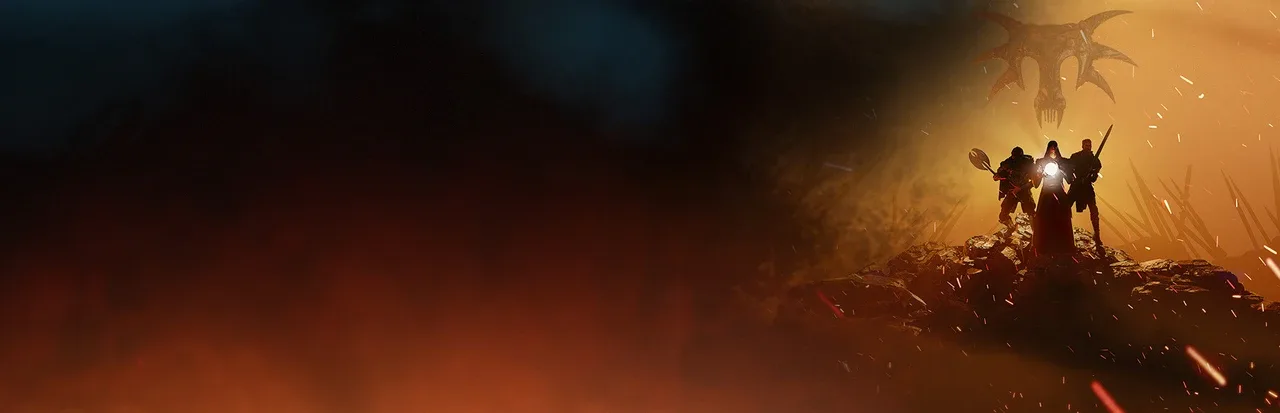
 When the first adventure of a nameless hero arrived in the penal colony under a magical barrier in 2001, few suspected that one of the most significant European RPGs of all time was being born. Now, more than 25 years later, the ambitious Gothic 1 Remake arrives from the Alkimia Interactive studio under the banner of publisher THQ Nordic, bringing the story of the nameless hero imprisoned in the colony back to life.
A brief history of the Gothic series
The beginnings of the now-legendary series were far from smooth. Gothic 1 was certainly not the best-looking title of its time, nor was it the most technically polished. However, thanks to its gameplay, atmosphere, raw feel, and the concept of a gritty RPG, it managed to win over hundreds of thousands of fans worldwide. It was primarily the feeling that the world existed without you, the player. The game did not hold your hand, and it didn't turn you into a savior of the world within the first fifteen minutes.
On this concept, Gothic 2 was built, which is symbolically labeled as the king of the series, pushing the mechanics of the first installment even further. Gothic 3 was somewhat of a disappointment; while it offered a gigantic open world without loading screens, a huge number of factions, and freedom of movement, it came hand-in-hand with severe technical flaws that essentially required the gaming community to save the game through fan-made mods. The last title in the series was Arcania: Gothic 4, a game intended to push the series forward, open it to a wider audience, and bring Gothic to modern RPG standards. The result, however, was a divided fan community, with some seeing it as a betrayal of the original vision and others as a solid fantasy RPG that unfortunately bore the Gothic name.
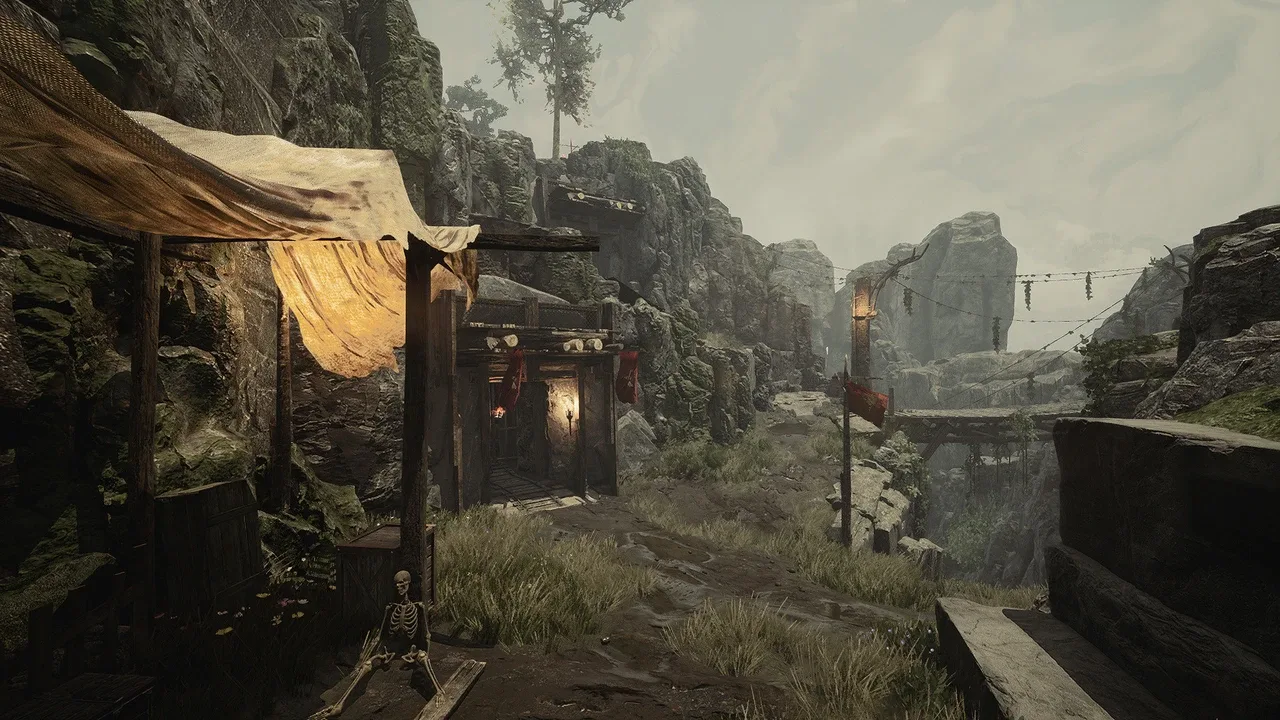
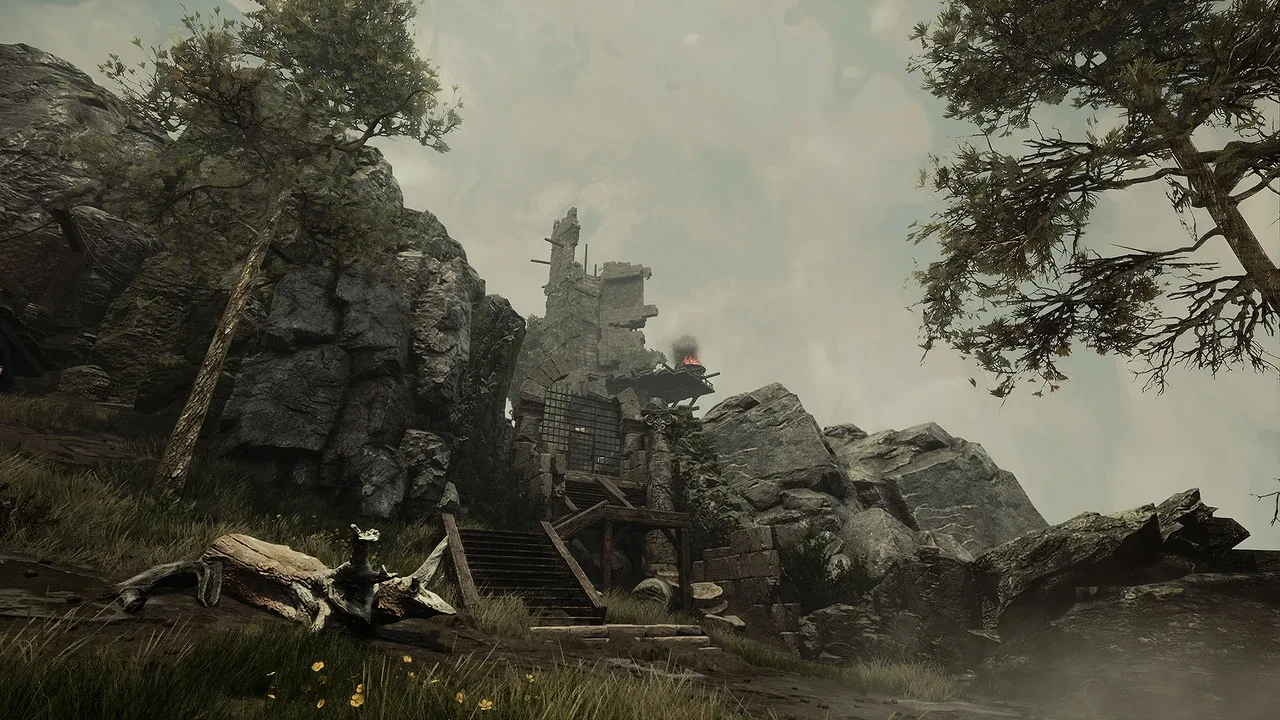
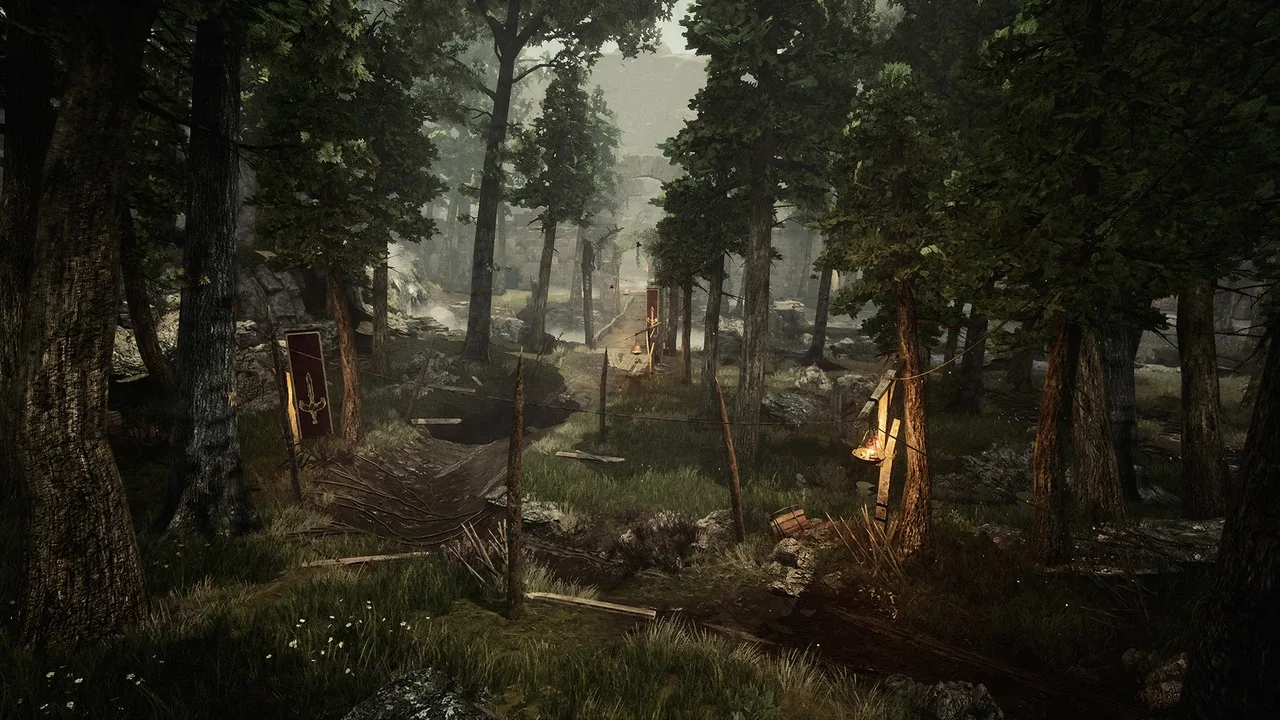
Now, we move back to the beginning—the era of Gothic 1. The first mentions of Gothic 1 Remake appeared back in 2019 with a playable teaser, and honestly, it didn't look good at all. Many felt that Gothic was losing its identity. The atmosphere was different, the characters felt off, the combat resembled generic action RPGs, and the whole demo felt like the developers didn't quite understand why the original game was so special. The criticism was so significant that the project practically went back to the drawing board, and for several years, a new version with a vastly different philosophy was developed. The developers took the community's feedback to heart, and now we have a full-fledged Gothic 1 Remake. How does it hold up compared to the series, the original title, and other RPGs on the market? Let’s explore that in the following lines.
Gothic 1 Remake and the return to the kingdom of Myrtana
It is important to mention that the story itself has not changed significantly. The story of Gothic 1 (pardon, Gothic 1 Remake) takes place in the war-torn Kingdom of Myrtana, where hordes of orcs have decided to invade human lands. In a long and bloody war, the King needed rare ore to forge weapons for his army to withstand this dangerous threat. Therefore, anyone who committed even the smallest offense was immediately sent to the penal colony in Khorinis to mine this rare and vital resource. To prevent the convicts from escaping and ensure a constant supply of ore, the King decided to summon the most powerful mages in the kingdom. Their task was to create a barrier that would prevent anyone from leaving the colony. However, the barrier created by the mages disrupted magical energy and turned the territory into an absolute prison from which nothing living could escape. Convicts, guards, and even the mages themselves were trapped. Anyone could enter, but nothing living could leave.
It was a double-edged sword; it didn't take long for the prisoners to revolt and take absolute control of the territory. The King could not send an army, as even loyal soldiers would rather die than voluntarily end up in this prison. It wasn't long before the King had to negotiate with the leaders of the colony and accept their various demands, from supplies and equipment to women. The rare ore was vital to the entire kingdom. Now, you arrive in the colony. A convicted nameless prisoner with no privileges, no past, and no respect. And your main goal is to survive.
The remake stays true to the original but expands significantly
The remake hasn't changed this premise, but it expands its context. It works more with individual factions, the relationships between them, and how the Colony is gradually breaking down into several centers of power. The Old Camp acts as a rigid structure built on ore control and order. The New Camp serves as a pragmatic community of survivors, and the Swamp Camp as a closed world of its own beliefs and faith. Yes, the story itself is not revolutionary, even today, but its power never relied on the originality of the plot. Instead, the outcome of the game is largely determined by which camp you join. The true magic lies in how naturally the world reacts to what happens within it. The original 2001 game was never perfect. It was harsh, clumsy, and at times hostile to itself. But at the same time, it offered something that is increasingly hard to find in modern RPGs: the feeling of true survival in a living world that does not follow the player, but its own rules.
And this is where Gothic immediately shows how it differs from most modern RPGs. While today's games often convince you of your uniqueness from the first minute, Gothic mercilessly knocks you to the ground. You are the weakest link in the chain. An ordinary scavenger can kill you in seconds. Guards will kill you whenever they feel like it. More experienced warriors will literally smear you across the ground. And you have to not only find your initial equipment, including a weapon, but also learn to defend yourself.
I use the word "defend" intentionally because in the beginning, you can only dream of an equal fight. Yes, you can clumsily wave weapons around, or even swing a sword from side to side, you can attempt to strike an enemy from above or even thrust, but it hardly counts as a "fight." First, you must gain experience and learn everything properly. This is a potential problem that might deter some players: the game's harshness and inaccessibility. At the start, you are truly happy when you can defend yourself against a common rat or a local thug. Your attacks are slow, clumsy, and largely inaccurate. There are no quest markers to tell you where to go; you are largely on your own.
However, if you persevere and survive long enough, gaining experience and getting trained in various fields, you will suddenly notice that you are no longer the weakest link in the chain. You will notice that combat is no longer a slow, clumsy swinging of a sword, but you will see fluid technical movements of a swordsman; you will be able to perform elegant combat combinations, and suddenly you will have a reputation where others will talk to you differently. Yes, Gothic 1 Remake (and the original) is about patience and is definitely not for players who want to kick some bandit butt, save a princess, and go to sleep immediately. If you expect a fast-paced action RPG filled with navigation markers, highlighted items, and constant hand-holding, Gothic may frustrate you. Here, you must listen to dialogues, think, search for your path, make mistakes, and bear the consequences.
The feeling of growth is one of the game's strongest points. Every level gained, every new weapon, and every learned skill has real significance. When, after several hours, you return to a place where you once fought for survival, you suddenly realize how far you have come. Not because the game increased the numbers on the screen, but because you had to fight for your position. This is the exact principle of old RPGs, where you simply lived the game and your character.
A world that doesn't need you
Equally impressive is the world itself. Yes, it is worth admitting fairly that the Colony is not huge by today's standards. It doesn't offer a map full of hundreds of icons or an infinite number of activities scattered across the landscape. Yet, it feels more alive than many current open-world titles. Each camp has its own atmosphere. The Old Camp resembles an organized dictatorship where everything runs according to precise rules. The New Camp represents rebels and adventurers dreaming of escape. The Swamp Camp is a mixture of a religious cult, fanatics, and people looking for meaning in a hostile environment.
But most importantly, the inhabitants of the Colony actually live. They go to work, eat, sleep, patrol, sit by fires, and have conversations with each other. You often feel as if you have entered a world that functioned long before your arrival and will continue to function without you. It is this quality that made the original Gothic special, and the remake preserves it with admirable care. It even expands upon it—according to the developers, the world is about 30% larger, with expanded areas, new side quests, and more space dedicated to locations and characters that felt unfinished in the original.
A unique feature of the remake is the presence of orcs in the Colony territory, where you even have the opportunity to learn the orcish language. In the original game, orcish dialogue was just a cipher; in the remake, the developers collaborated with professional linguists to create a fully functional and authentic orcish language. You will be able to study the language, orcish culture, and interact with orcs using both human speech and the orcish language.
A combat system between the old and new world
I have mentioned combat several times, so it is time to say more about the system, which was one of the biggest question marks of the project. The original Gothic had a specific, now archaic, combat system that was unique but difficult to access for many players. The remake decided to go a different route, trying to preserve the weight and tactics while removing the technical clumsiness. The result is a system that is more fluid, readable, and modern, yet still requires timing, attention, and respect for enemies. Every fight can end quickly if you make a mistake. Evidence of this is the four buttons for combat: two types of classic swings, an overhead strike, and a thrusting lunge. Over time, you will also gain the ability to create impressive and deadly combinations. At the same time, you sometimes feel that the game is trying to sit on two chairs. It wants to be modern but also true to its "old soul." And it doesn't always manage to maintain that balance perfectly.
Enemies are still dangerous. Mistakes are punished. Timing attacks and proper positioning remain important. It is here that you can see the developers spent years collecting community feedback, trying to preserve the character of the original system without forcing players to fight against the controls themselves. Furthermore, combat is highly dependent on your equipment and the weapons you have in your hands, and last but not least, on your chosen skills and attributes.
A specific debate could be had about the artificial intelligence; unlike the original game, enemies do not hesitate to attack in groups, and experienced warriors aren't afraid to use tactics. I wouldn't say they always succeed, but the effort to use numerical superiority is definitely there. It is also worth mentioning the NPC reactions to your behavior. If you are caught sneaking around somewhere, you are warned to get out or to drop the item and leave. If you do so, the conflict does not escalate. If you don't leave or return the item, or try to run away with stolen valuables, the anger of the robbed is usually significant and generally ends with your death.
Gothic 1 video gameplay
The dark world of gothic
If there is one area where the remake truly shines, it is the audiovisual processing. The original Gothic was impressive in its time, but by today's standards, it is understandably outdated. Gothic 1 Remake utilizes modern technology and Unreal Engine 5, thanks to which the Colony looks exactly as many fans have imagined it in their fantasies for years. The forests are denser. The mines feel claustrophobic. The cliffs are more monumental. And the barrier itself finally looks like a supernatural force capable of changing the fate of an entire kingdom. The developers resisted the temptation to create a sterile fantasy fairy tale. The Colony remains a dirty, brutal, and unpleasant place. Most characters do not look like heroes from a poster. They are tired, scarred, suspicious, and often unpleasant. Exactly as people trapped for several years in a penal colony should be.
Moreover, the developers utilized the environment, and the world is expanded vertically, literally inviting exploration and the discovery of various nooks, searching for chests, and other useful items. You will climb cliffs, dive into flooded caves, and discover secrets while trying to find interesting items. However, even though the graphics are truly impressive on full settings, it is not without flaws. Some animations still feel slightly clumsy. Occasionally, you will encounter minor technical issues and optimization problems. A portion of the fans will likely never accept some changes in the story presentation or the more cinematic approach to some scenes. And just like the original, the game will not be for everyone.
The music follows the legacy of the original game and very sensitively combines nostalgia with modern processing. Calm melodies during exploration of nature alternate with darker motifs in dangerous areas, and ambient sounds of the surrounding world help create a constant sense of presence. Often, it is enough to stop at the edge of a forest, listen to the distant sounds of creatures, and watch the sunset over the Colony. It is in such moments that one realizes why Gothic earned such a devoted community. Nevertheless, some characters have obviously mismatched voice acting that doesn't quite fit their appearance.
FAQ
Q: Is the story of the Gothic 1 Remake completely different from the original?
A: No, the core story remains faithful to the original, but it is expanded with new contexts, side quests, and more depth for individual factions and characters.
Q: How does the new combat system work compared to the old one?
A: It is more fluid and modern, allowing for better movement and combinations, but it retains the requirement for tactical planning, timing, and respect for enemies' strength.
Q: Is the game suitable for beginners of the series?
A: Yes, but keep in mind that the game is intentionally challenging and does not hold your hand. It requires patience, exploration, and the ability to learn from mistakes.
Q: Did the developers change the atmosphere of the game?
A: The developers focused on preserving the "raw" and "dark" atmosphere of the original, utilizing modern technology to make the world of the Colony more immersive and detailed.