Why Sudoku is good for your brain? The science behind the daily habit
 By Adam Macek
6 min read
By Adam Macek
6 min read
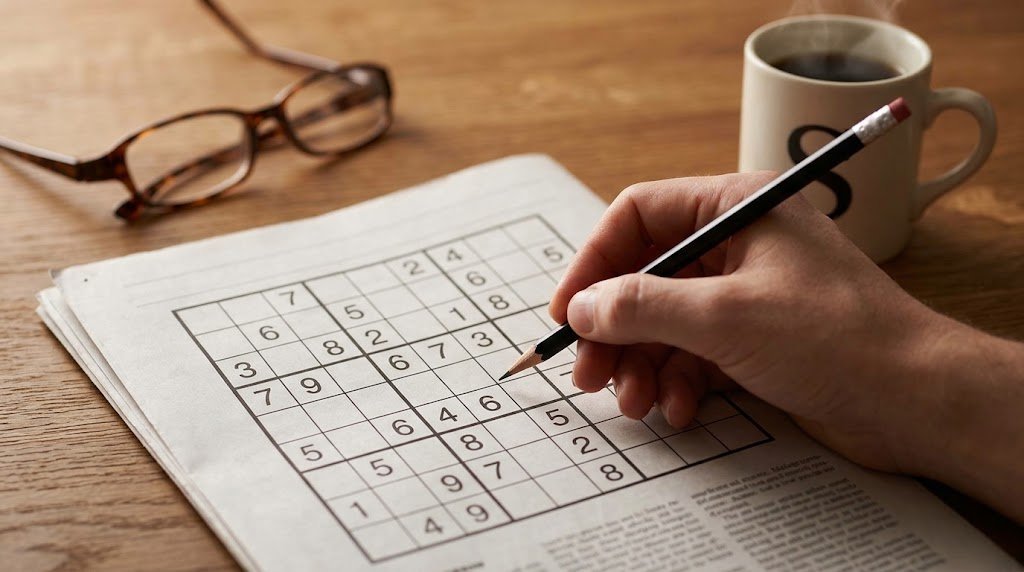
Sudoku looks deceptively simple: a 9×9 grid, nine numbers, one rule, no repeats in any row, column, or box. Yet this puzzle has quietly become one of the most-played logic games on the planet, filling newspaper pages, phone apps, and browser tabs every single day. But sudoku isn't just a way to kill five minutes on a coffee break. A growing body of research and decades of anecdotal evidence from dedicated players point to real cognitive benefits from making it a daily habit.
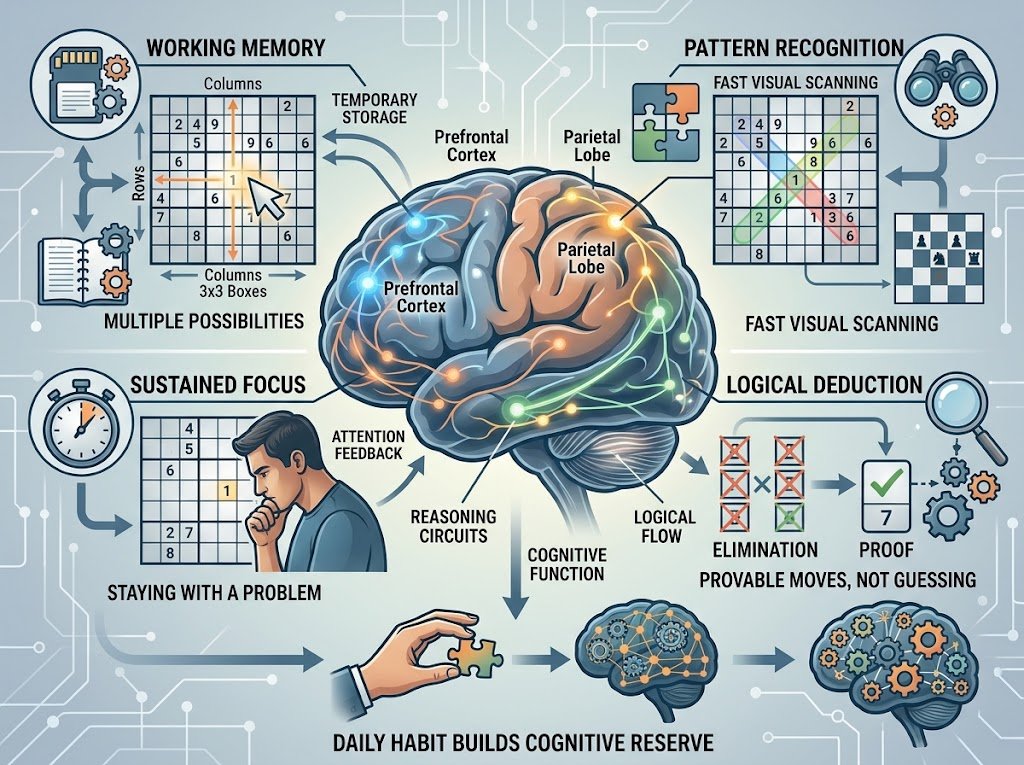
Here's what's actually happening in your head when you play and why it's worth adding to your routine.
A puzzle with a surprisingly recent history
Despite its Japanese name "su" (number) and "doku" (single) sudoku wasn't born in Japan at all. Number puzzles using grids date back to 18th-century Switzerland, where mathematician Leonhard Euler experimented with "Latin squares," grids where each number appears exactly once per row and column. The modern 9×9 version with the added 3×3 box constraint first appeared in an American puzzle magazine in 1979, credited to a freelance puzzle constructor named Howard Garns.
The puzzle only exploded into a global phenomenon after a Japanese publisher picked it up in the 1980s, gave it the name "sudoku," and refined the format. From there, a retired judge in New Zealand built a computer program to generate puzzles by hand-crafted algorithm, pitched it to The Times of London in 2004, and within a few years sudoku was appearing in newspapers on every continent. Today it's one of the most-played logic puzzles in the world, translated into dozens of languages without needing translation at all, numbers are numbers everywhere.
What Sudoku actually trains in your brain
Unlike trivia or word games that mostly test what you already know, sudoku is a pure logic exercise. There's no vocabulary to memorize and no external knowledge required, just the ability to hold multiple possibilities in your head at once and narrow them down through elimination. That's precisely what makes it such an effective mental workout.
- Working memory: Every time you scan a row for missing numbers while also tracking what's allowed in the intersecting column and box, you're exercising working memory, the mental scratchpad your brain uses to juggle information in real time.
- Pattern recognition: Experienced sudoku players start to "see" candidate numbers almost instantly, the same way a chess player recognizes board patterns without consciously calculating every move.
- Sustained focus: A sudoku puzzle can't be solved in scattered bursts of attention. It rewards sitting with a problem, which makes it a low-stakes way to practice sustained concentration.
- Logical deduction: Every correct move in sudoku has to be provable through elimination, not guessed, a habit of mind that transfers surprisingly well to other structured problem-solving.
Video of how to play sudoku🎥
Sudoku as a stress reliever
There's also a psychological side to this. Sudoku sits in a sweet spot: it's challenging enough to fully occupy your attention, but structured enough that it doesn't spike anxiety the way an open-ended problem might. Psychologists sometimes describe this state, full absorption in a task that's difficult but achievable, as "flow." Time spent in flow is consistently associated with lower stress and a calmer mental state afterward.
That's part of why so many people reach for sudoku specifically when they want to unwind: it occupies the same restless part of the brain that spirals into worry, but points it at numbers instead. It's also one of the few genuinely screen-agnostic habits, just as effective on paper during a commute as it is in a browser tab during a break.
Sudoku vs. other brain games
Not all "brain training" games are created equal. Word searches lean on vocabulary. Memory-matching games test recall. Sudoku is closer to a pure logic and deduction exercise, which is why it's often grouped with chess and logic puzzles rather than general trivia games. If your goal is specifically to train reasoning and working memory, not just pass time, sudoku is one of the more efficient options available in a browser.
Building a daily sudoku habit
The benefits of any brain exercise compound with consistency, not intensity. A few tips if you want to make it a habit rather than an occasional distraction:
- Start easy: Beginning on an Easy difficulty puzzle takes just a few minutes and is far less intimidating than jumping straight into Hard mode, perfect for building the habit before working up to tougher grids.
- Same time, same place: Attaching sudoku to an existing routine (morning coffee, commute, lunch break) makes it far more likely to stick than trying to "find time" for it.
- Let yourself get stuck: The moments where you're stuck and have to reconsider your approach are exactly where the cognitive benefit comes from, don't rush to a solver at the first sign of difficulty.
Where to play
If you want to try it out, you can play a perfect version of the game over on ShortcutGames Sudoku, it offers easy, medium, hard and expert difficulty levels, so you can begin with a gentler grid while you build the habit and work your way up as your logic skills sharpen.
FAQ
Q: How long should I play sudoku each day to see cognitive benefits?
A: Even 10–15 minutes a day is enough to build a consistent habit. What matters more than duration is regularity, playing a little every day trains your brain more effectively than one long session per week.
Q: Is sudoku actually backed by science, or is it just a popular belief?
A: Studies on cognitive training consistently show that logic puzzles like sudoku engage working memory and reasoning circuits. While no puzzle is a substitute for broader healthy habits, regular mental exercise is well-supported as part of maintaining cognitive sharpness over time.
Q: I'm a beginner, should I jump straight into Hard puzzles?
A: Not necessarily. Starting on Easy difficulty uses the exact same logic and rules but with fewer candidate numbers to juggle, making it a smoother way to learn core strategies before working up to Medium and Hard grids.
Q: Does sudoku help with anything besides logic skills?
A: Many players also use it as a stress-relief tool. Because it fully occupies your attention without being open-ended or anxiety-inducing, it's an effective way to switch off from racing thoughts for a few minutes.
Q: Is sudoku actually a Japanese invention?
A: Not originally. The underlying grid logic traces back to 18th-century Swiss mathematics, and the modern 9×9 format was created by an American puzzle constructor in 1979. It was a Japanese publisher who popularized the format and gave it the name we use today.