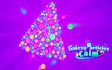
About Galaxy Particles Calm
Instead, you get a quiet universe made of drifting light, and your only job is to nudge it into something beautiful.
Every particle reacts to gravity the moment you touch it, so a single click can pull scattered dust into a spinning cluster or send two clouds crashing into a brand new shape. It's less a game with rules and more a cool little sandbox for people who want their screen time to feel calmer instead of more stressful.
Read moreShow less
There's no score to chase in Galaxy Particles Calm, which is exactly the point. Your progression is really just your own growing sense of what the gravity does, once you understand how clusters attract each other you start building bigger and more deliberate formations instead of stumbling into them by accident.
The visuals lean fully into soft glows and slow moving trails, giving each session a dreamy, low key look that fits the simulation at its core. There's no scoring system pulling your attention away from the screen, just particles drifting and merging at their own pace.
If you've been looking for a browser game that asks for patience instead of reflexes, Galaxy Particles Calm is worth a few quiet minutes. Open it up, drag a few particles together, and see what kind of galaxy you end up with.
Quick summary
- Guide glowing particles with gravity until they merge into new cosmic shapes.
- Watch small clusters combine into much larger, more detailed formations.
- There's no losing condition, so you can experiment without any pressure.
- Discover unexpected patterns just by redirecting how particles flow together.
- Play in short bursts or let it run as a relaxing background activity.
- Works equally well with a mouse on desktop or a finger on mobile.
Key features
- Simple drag based controls anyone can pick up instantly.
- Realistic looking gravity that pulls particles into believable clusters.
- A calm, glowing art style built entirely from drifting light.
- No fail states, no timers, no pressure of any kind.
- Works on both desktop browsers and mobile devices.
- Encourages open ended experimentation rather than a fixed goal.
Tips & tricks
- Start by dragging just one or two particles before adding more to the mix.
- Combine smaller clusters together to build bigger, more dramatic structures.
- Let particles drift naturally for a while to see where gravity takes them.
- Redirect a moving cluster mid flow if you want a specific shape instead of a random one.
- Treat a session as a short reset rather than something you need to finish.







Comments